7 Real-World ERP Implementation Examples That Actually Worked (And Why)
‘The biggest business problems often start with a spreadsheet nobody questions’
As your business grows, disconnected data, inventory mistakes, and slow reporting can quietly reduce profits.
Do you know?
Companies using ERP effectively can improve operational performance, and as per a recent ERP Report, 55.3% of organizations reported significant deployment of business intelligence initiatives following their transformation efforts.
One example of ERP implementation can show how businesses fixed these issues before they became costly.
Have you faced any of these challenges:
- Why does inventory data never match across teams?
- Are manual processes slowing daily operations?
- How much time is wasted on duplicate work?
- Can you access accurate reports when needed?
The good news is that this post will solve many growth-related bottlenecks.
In this blog, we will review some actual ERP examples, what made them successful, and how BRQ – a leading ERP implementation company in Qatar helps startups and small businesses develop a stronger operational foundation.
What Does a Successful ERP Implementation Look Like?
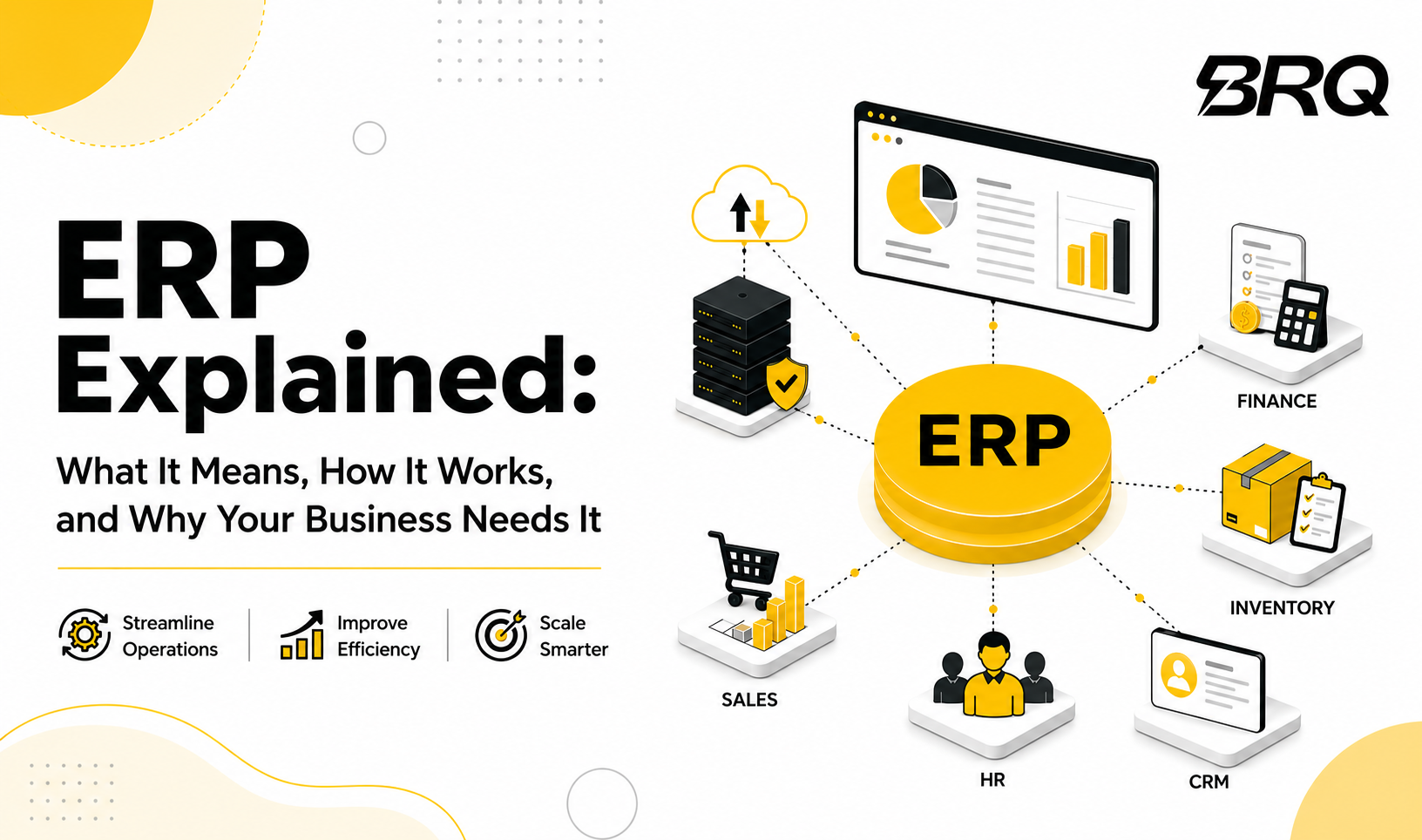
A successful ERP implementation gives owners better control over daily work. It connects finance, sales, stock, purchasing, operations, and reporting, so teams stop chasing information.
A strong example of ERP implementation improves inventory accuracy, reporting speed, order processing, and staff accountability. The real win comes when data and workflows move in one direction.
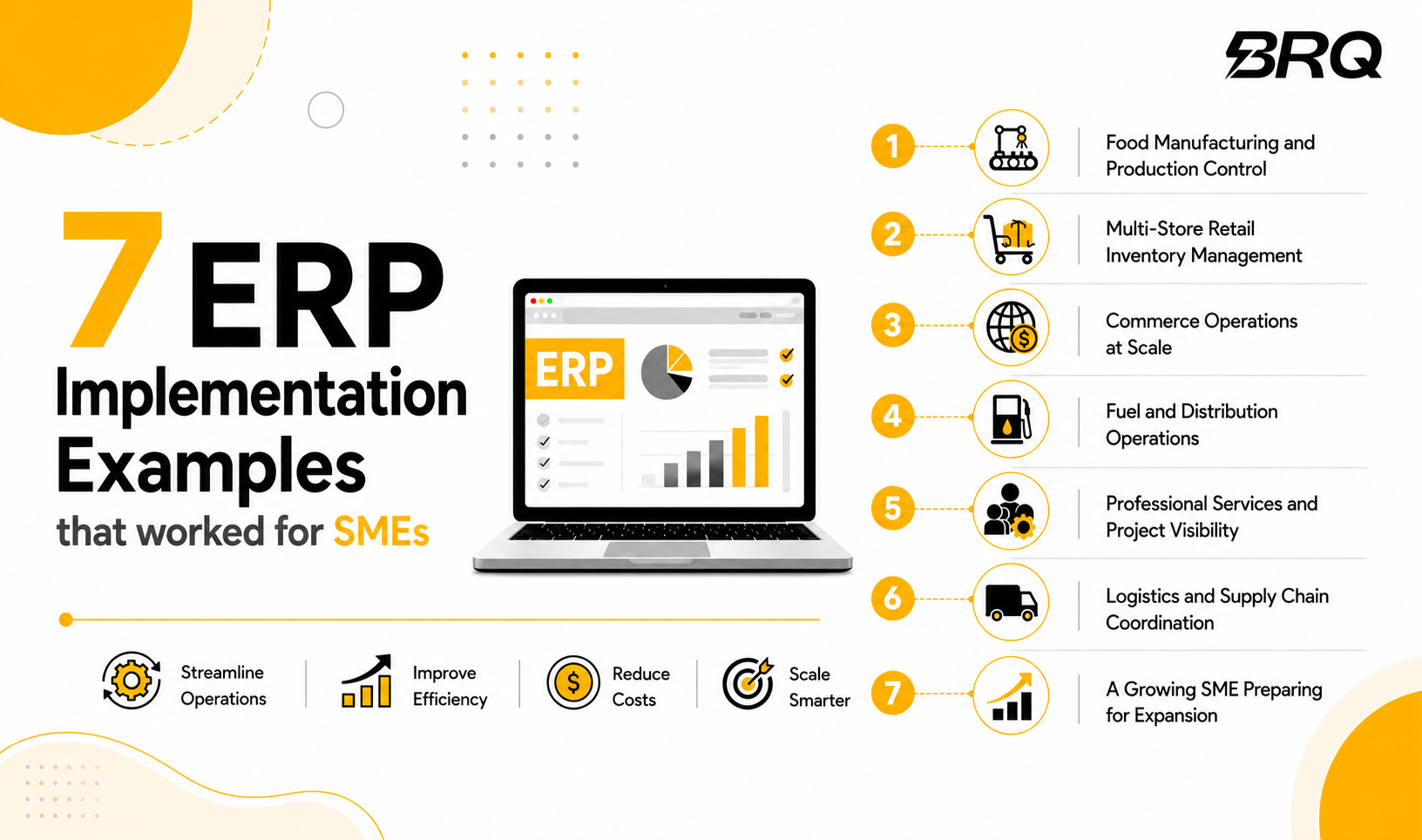
ERP Example 1: Food Manufacturing and Production Control
Large food producers such as Baladna work across raw materials, production, storage, quality checks, and distribution. It is a significant example of ERP implementation.
ERP tracks raw material use, supplier orders, production batches, and warehouse movement from one system. Managers see problems before shortages affect output.
At BRQ, we help manufacturing teams map these workflows first, so the ERP setup follows real production work.
ERP Example 2: Multi-Store Retail Inventory Management
Retailers similar to Al Meera need accurate stock visibility across branches. Al Meera is one of the famous ERP software examples.
When store teams update stock manually, errors can create over-ordering, understocking, and missed sales.
ERP centralizes inventory across locations. Managers can see which products are moving, which branches need replenishment, and where slow-moving stock is sitting.
This works because it solves a daily retail problem. Better stock visibility means better buying decisions.
ERP Example 3: Commerce Operations at Scale
Fast-growing eCommerce businesses often start with WhatsApp orders, spreadsheets, manual invoices, and separate delivery updates.
That works for a few orders. It breaks when volume grows.
A business operating like Snoonu needs sales, delivery status, inventory, and support information connected. ERP reduces repeated data entry and gives teams a cleaner order flow.

For Qatar eCommerce brands, BRQ can connect store operations, payment workflows, inventory rules, and reporting dashboards.
ERP Example 4: Fuel and Distribution Operations
Distribution companies handle inventory movement, purchasing, transport activity, and service locations.
Businesses in sectors similar to WOQOD need clear tracking because small reporting gaps can create large delays. WOQOD is one of the great ERP examples.
ERP gives leaders one view of stock movement, supplier activity, cost data, and location performance. It also helps teams identify delays earlier.
Distribution needs timing. ERP improves timing by giving every department the same operational truth.
ERP Example 5: Professional Services and Project Visibility
Service businesses often struggle to know which projects are profitable. Teams may track hours in one place, expenses in another, and invoices somewhere else.
ERP software solutions connect project budgets, staff time, billing, expenses, and reporting. Managers can see if a project is healthy before it becomes a loss.
A good ERP setup changes how leaders plan resources and control delivery quality.
ERP Example 6: Logistics and Supply Chain Coordination
Qatar’s logistics businesses depend on speed, coordination, and accurate updates. Warehousing, vendor communication, shipment tracking, and finance cannot work as separate islands.
ERP helps teams track inventory, purchase orders, shipment stages, vendor performance, and cost movement from one place. This reduces delays and improves reliability.
BRQ helps logistics teams choose the right modules, integrations, and dashboards, so ERP supports daily operations.
ERP Example 7: A Growing SME Preparing for Expansion
One common successful ERP implementation examples is a growing SME preparing to scale.
At the start, spreadsheets feel easy. Later, they create duplicate work, slow reports, and unclear ownership.
ERP brings finance, sales, inventory, procurement, and operations into one system. The best results come when the business standardizes processes before launch.
This is why many ERP projects work. The company fixes the operating model before chaos becomes normal.
What Can Qatar Businesses Learn from These Examples?
Every successful ERP implementation case study has the same base: process clarity before software selection. The business knows what is broken, what must improve, and how success will be measured.
Want to know whether ERP is the right fit for your company?
Our ERP guide for Qatar SMEs, meaning, benefits, and setup, explains ERP fundamentals, business benefits, implementation considerations, and what Qatar businesses should prepare before starting an ERP project.

So, before choosing ERP software solutions, check which reports take too long, where manual errors happen, which teams repeat work, and what data leaders need daily.
At BRQ, as your local and trusted ERP implementation partner, we help Qatar businesses answer these questions before implementation. That makes the roadmap of ERP consulting services practical and easier for staff to use.
So, why wait?
This is the right time for you to challenge your competitors and gain a significant advantage in the Qatar marketplace.
Contact us today to discuss your project needs.
BRQ – We Don’t Fit Your Business Into a Box. We Build Around It!
Frequently Asked Questions
What is a real ERP implementation example?
ERP examples in real life connect finance, stock, sales, procurement, operations, and reporting into one system. A successful implementation allows teams to access the same information in real time, reducing manual work and improving decision-making.
What makes ERP implementation successful?
Clear goals, clean workflows, training, leadership support, and measurable outcomes. Businesses that prepare their processes before implementation usually achieve faster adoption and better long-term results.
What are common ERP software examples?
Common ERP software examples include finance, inventory, HR, procurement, sales, manufacturing, and reporting systems.
Can small businesses use ERP?
Yes. ERP helps when manual work, poor reporting, or disconnected tools slow growth. Small businesses often benefit from improved visibility and process control long before they reach enterprise scale.
How does BRQ help with ERP implementation?
BRQ reviews workflows, finds bottlenecks, recommends ERP options, and builds an implementation plan around daily needs. This helps businesses choose the right solution while avoiding unnecessary complexity, cost, and implementation risks.