

How to Create an Online Store in Qatar Step by Step
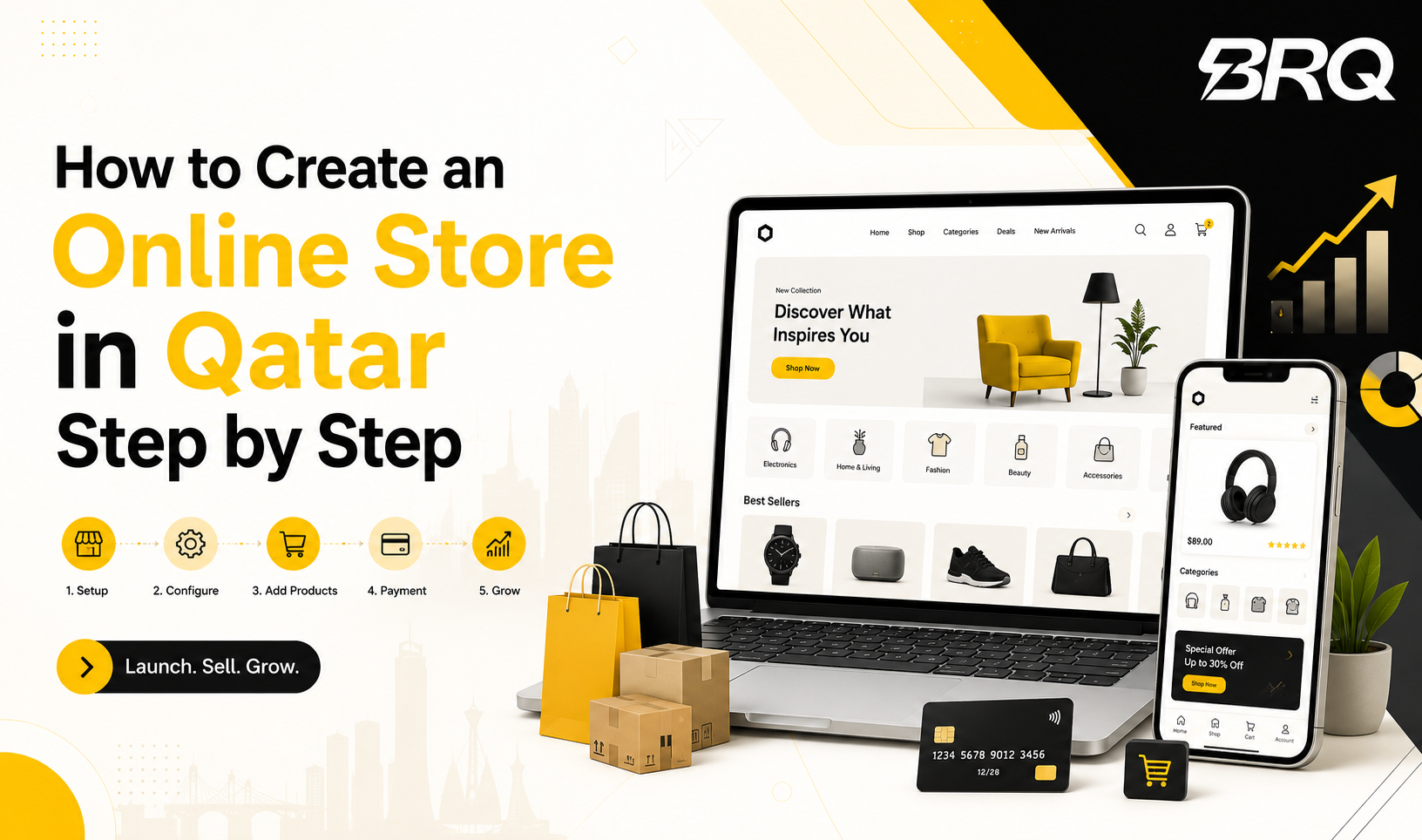
You can launch a good-looking store and still lose trust before the first order. In Qatar, licences, payments, deliveries, and returns move fast. You need a clear order of work. Teams working with BRQ, Qatar’s custom software and AI partner, design the build around the realities of daily sales.
Step 1: Check the Licence And Selling Activity First
Start by checking whether your business activity can sell through the channel you want. A website, Instagram page, WhatsApp flow, or app may change what you need before public sales begin.
MoCI Decision 25 of 2026 introduced a licensing framework for certain eCommerce activity through websites, platforms, and social channels in Qatar. It entered into force on 16 March 2026.
Your first step is not design. It is proof that the selling route is safe.
Licence Readiness Checks
- Confirm your business activity
- Check the sales channel
- Prepare trade and contact details
- Keep buyer terms visible
A Doha food brand may sell through Instagram first. That still needs clear handling of payments, delivery, and refunds.
Once the selling activity is clear, the store model becomes easier to choose.
Step 2: Choose How To Create An Online Store
The right model is the one your team can run every day. A product store, B2B order portal, booking store, and subscription store all need different work behind the scenes.
Your store model decides the full launch path, from license and payment to platform and first month sales tracking.
A single-product Shopify store may need fast checkout and simple delivery rules. A Doha spare parts seller may need Adobe Commerce, account pricing, Arabic search, and approval steps.
Ask three hard questions before paying for the platform.\
- Will people buy without calling first?
- Can staff pack and send orders daily?
- Does each sale create repeat business?
Qatar’s eCommerce Portal supports existing businesses and startup entrepreneurs with guidance for eMerchants and eCommerce service partners.
The model should carry the store, not fight it.
Step 3: Set Payment Delivery And Trust Rules
Buyers trust an online store when payment, delivery, refund, and support details are clear before checkout. Qatar buyers will not wait for hidden terms after they decide to pay.
Theqa matters here because it is Qatar’s eCommerce Trustmark programme for approved members. It supports greater trust in online retail through checks and guidance.
The QA criteria ask eMerchants to show payment types, fees, card charge timing, delivery fees, and delivery time clearly. These details reduce doubt at checkout.
Buyer Trust Checks
- Show payment fees before checkout
- Display delivery cost clearly
- Explain refund and return terms
- Add phone and email support
BRQ can help Qatar teams turn these trust steps into store screens, admin checks, and staff tasks. The buyer sees a simple order, but your team gets control of it.
Trust rules must be ready before the website work starts.
Step 4: Match eCommerce Website Development To Daily Work
eCommerce website development should match how orders move through your team. The site needs to connect product pages, payment, stock, delivery, and service without making staff chase every order by phone.
For a small Qatar retailer, Shopify can be enough when the stock is simple. For a multi-branch seller, Magento, Odoo, or ERPNext may be safer when invoices and stock must match.
The admin panel matters as much as the shop front. A weak panel creates extra calls, missed refunds, and wrong delivery updates.
PDPL also belongs in the first build. Customer names, phone numbers, addresses, and email lists are business data, not loose notes in a shared sheet.
Give one-person clear order control each day. Give the system clear rules for cancelled orders, cash on delivery, and stock changes.
A store that matches daily work can grow without turning every order into a staff problem.
Step 5: Add eCommerce App Development After Repeat Orders
eCommerce app development makes sense when repeat use is part of the sale. It is usually too early when buyers only need product pages, payment, and delivery tracking.
An app can help a Doha grocery brand with weekly orders, saved carts, and loyalty points. It can also help a clinic group when bookings, reminders, and account history drive return visits.
A website should often come first because it demonstrates demand more quickly. Android and iOS work can follow when order data shows that buyers come back often.
The warning is simple. Do not pay for an app to fix a weak offer or slow delivery.
Check 60 to 90 days of orders before you commit. If buyers return often, the app has a real job.
Start with the channel that proves sales, then add the channel that protects repeat buyers.
Step 6: Measure Sales Before Spending On Ads
Measure the first month before you spend more on ads. Traffic can hide weak payment trust, slow delivery, and product pages that do not answer buyer questions.
Start with numbers that show real order health.
- How many visitors buy
- How many buyers return
- How many deliveries fail
- How many refunds repeat
- How much each paid order cost
Qatar’s Digital Economy Hub connects businesses with guidance, funding routes, and support linked to the National Development Strategy 2030 and the Digital Agenda 2030.
That wider push matters, but your store still needs small daily proof. Orders, repeat buyers, and delivery issues show what to fix next.
Once the first month is measured, the next build choice becomes safer.
Build Your Store Around Qatar Sales Reality
You now have the real step-by-step process. Check the licence path, choose the model, set trust rules, build the website, delay the app until repeat orders prove it, then measure the first month.
BRQ helps Qatar businesses turn that order into a build that fits daily sales work. That can mean bilingual buying paths, payment-ready website work, PDPL care, and growth tracking that shows what to fix first.
We don’t squeeze your business into a standard store. We shape the store around how you actually sell in Qatar.
Start with the smallest useful step. Review what you have, find the gaps, and decide what must be built first.
Frequently Asked Questions
How do I create an online store in Qatar?
Start by checking your business activity, licence path, payment method, and delivery flow. In Qatar, your website, social page, or app can become the selling channel, so buyer trust and clear order terms must be ready before public sales begin.
How much does it cost to create an online store in Qatar?
Cost depends on the store model, product count, payment setup, delivery needs, and admin work. A simple Shopify store may cost less, while Magento, Odoo, ERPNext, or custom work costs more because it handles deeper stock and order needs.
Do I need eCommerce Website development before selling online?
You need eCommerce website development when your sales need clear product pages, payment, delivery updates, and order control. Some Qatar sellers start on social channels, but a website gives buyers stronger trust and gives your team cleaner daily order records.
Is eCommerce App Development better than a website in Qatar?
eCommerce App Development is better only when repeat buying is central to your Qatar sales model. A website is usually safer first because it proves demand, payment trust, and delivery flow before you pay for Android and iOS work.
How does BRQ help Qatar businesses create online stores?
BRQ works with Qatar SMEs and growing brands to shape online stores around real sales work. The team covers eCommerce platforms, web development, and digital marketing, so payments, bilingual buying, PDPL care, and growth tracking support daily orders.
